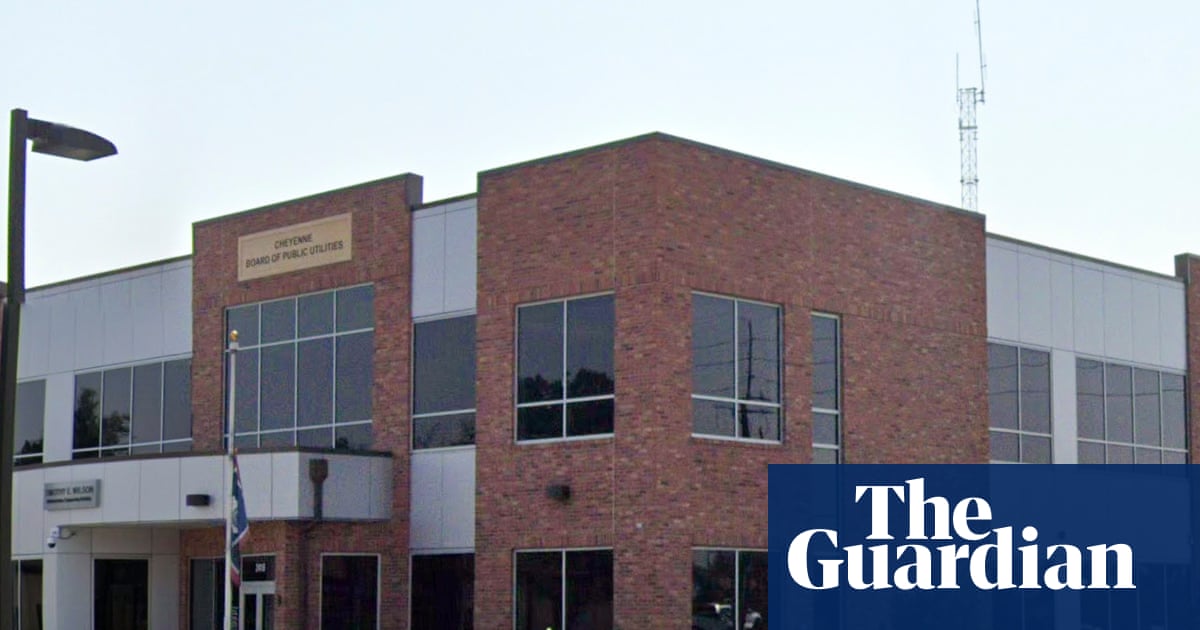
Public opposition to the Project Cosmo mega datacenter was already growing before the bacteria incident. The Cowboy State Daily reported in May on pushback to projects in Cheyenne and elsewhere in Wyoming, including environmental questions…
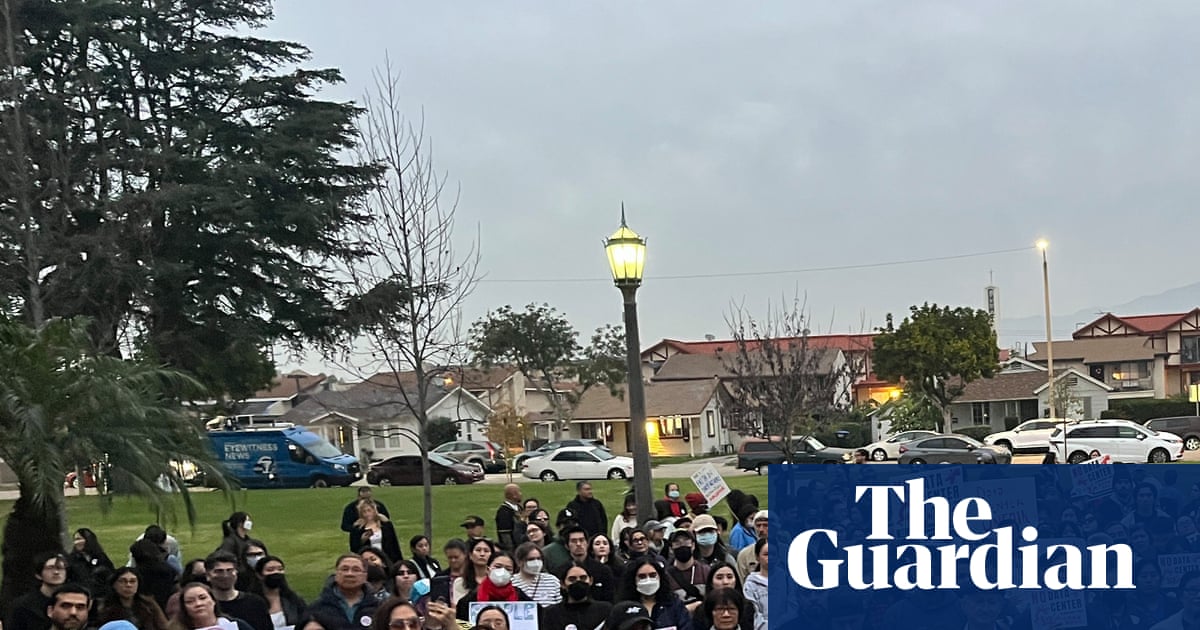
Residents in Monterey Park, California, became the first in the US to vote on a permanent ban on datacenters on Tuesday, and early results indicate a resounding victory for the prohibition. While many cities and counties have already…
When he Googled, he found that lawmakers in his state had paved the way to make the Port Washington project a reality. The deal between Port Washington and Vantage gave an estimated $458m in tax breaks to the developer over 20 years to…
Nearly 4,000 people have lodged objections to the project being approved, with this pushback leading to contentious public meetings that Lee Perry, the Box Elder county commissioner, said have left him feeling “physically sick” amid…
Fortunately for all of us, an unlikely and unruly coalition has emerged to resist the AI takeover by taking aim at the industry’s core infrastructure. In 2025, about 48 datacenter projects worth an estimated $156bn were blocked or stalled…
DeepMind’s UK workers voted to unionize in April. One of the workers said they were particularly driven by reports that Google was close to reaching a deal with the defense department and pointed to the US’s “capricious Iran war” and the…
Judge Lin’s ruling found that the government overstepped its authority in its attempts to punish and coerce Anthropic, stating that the Pentagon designating the AI company as a “supply chain risk” is “likely both contrary to law and…
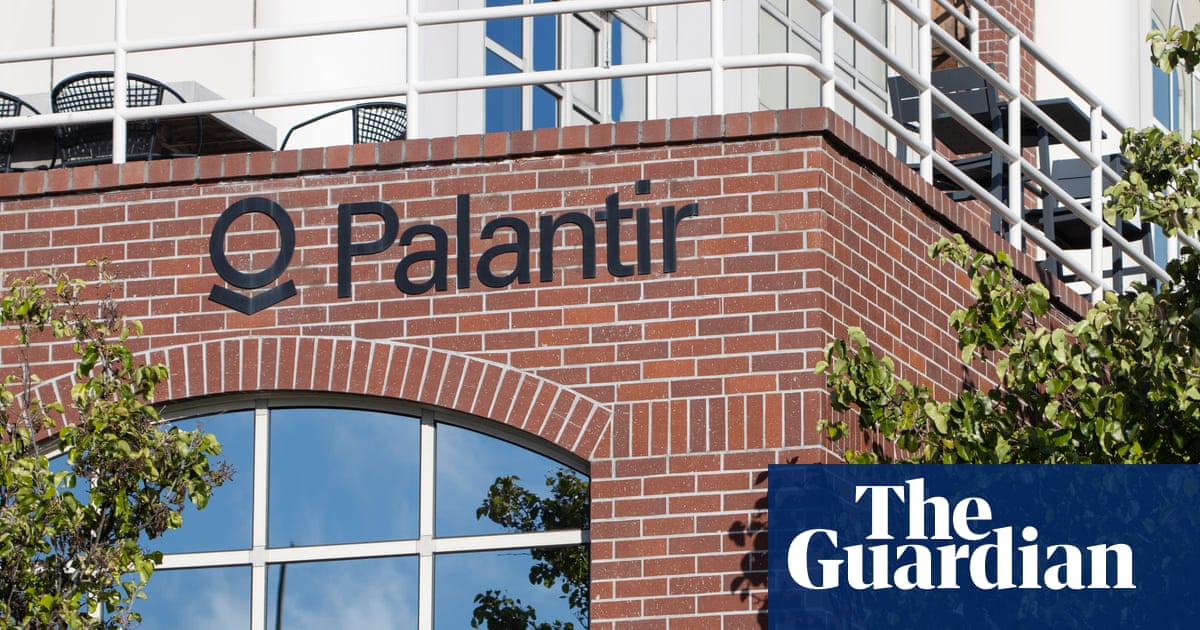
Nurses, pro-Palestinian activists and social and climate justice groups applied pressure on the city government as part of a nationwide campaign known as Purge Palantir to stop the company from contracting with government agencies,…
The bill’s official introduction comes as calls to halt AI datacenter expansion have gone from the margins to the mainstream. Since August 2025, towns and counties across the country – including in Missouri, Indiana, Georgia and North…
Chief executive Dario Amodei said in a statement that the threats from the defense secretary, Pete Hegseth, would not change the company’s position, and that he hoped Hegseth would “reconsider”.
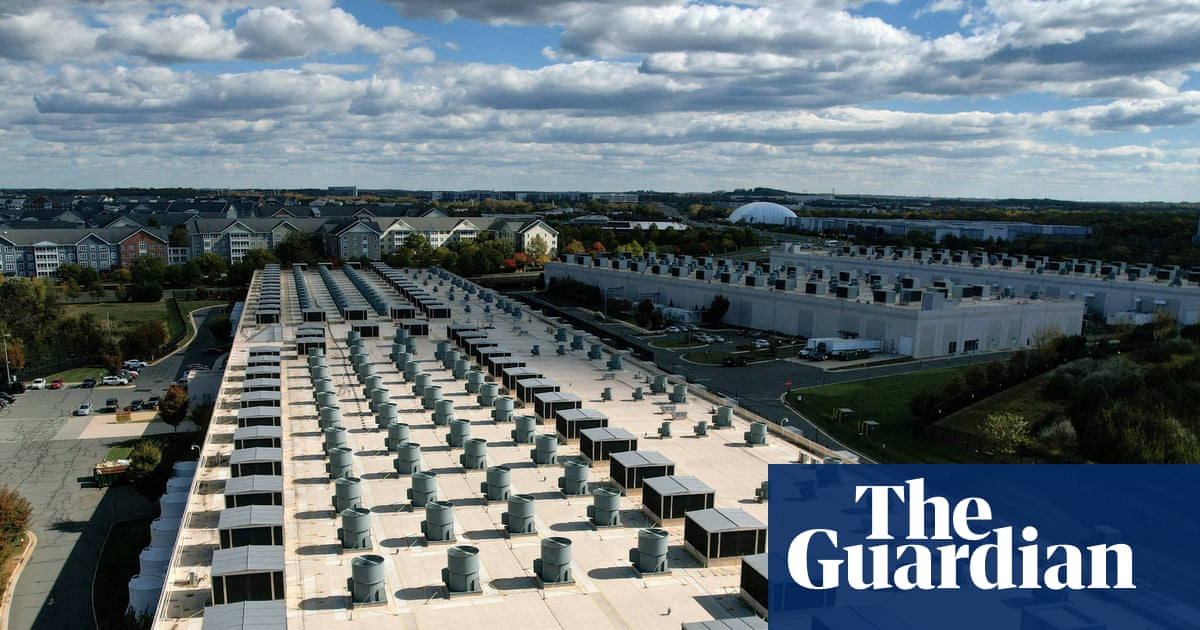
Cancellations and delays of new US datacenters have increased as the artificial intelligence boom runs up against a slate of issues, including supply chain snags, energy shortages and tariff-induced restraints. Grassroots opposition from…
Yet despite sums that often dwarf the land’s recent value, farmers are increasingly shutting the door. At least five of Huddleston’s neighbors gave similar categorical rejections, including one who was told he could name any price. In…
Public opposition to the Project Cosmo mega datacenter was already growing before the bacteria incident.
The Cowboy State Daily reported in May on pushback to projects in Cheyenne and elsewhere in Wyoming, including environmental questions about the safety and integrity of so-called closed loop cooling systems used by Meta and their tech company rivals pushing the artificial intelligence revolution.
Residents in Monterey Park, California, became the first in the US to vote on a permanent ban on datacenters on Tuesday, and early results indicate a resounding victory for the prohibition.
While many cities and counties have already passed temporary or indefinite moratoriums via their local governments, Monterey Park would be the first to do so through a ballot initiative.
The ballot measure needs a majority vote – at least 51% – to win. As of 2am Pacific Time, 86.3% of the more than 7,000 votes counted so far were in favor of banning datacenters. While it can take days to finalize election results, the stark gap was enough evidence for Jose Sanchez, a city councilmember, to claim a “landslide victory” for residents who don’t want to live near datacenters.
“[This] shows unequivocally that residents in Monterey Park do not want datacenters in their community,” Sanchez said. “We hope that other communities will use the model set by residents here in Monterey Park as inspiration to stop data centers from encroaching in their backyard.”
When he Googled, he found that lawmakers in his state had paved the way to make the Port Washington project a reality. The deal between Port Washington and Vantage gave an estimated $458m in tax breaks to the developer over 20 years to fund infrastructure for the project,with the city not seeing any of that tax revenue during that period.
“It was shocking,” Berens said.
That’s when he decided to do something he had rarely done before: discuss politics in his videos. He used his platform to address one of the more polarizing issues in contemporary life: what AI portends for Americans.
He channelled his outrage at lawmakers in Port Washington, a historic city on the banks of Lake Michigan and once home to thriving fishing and shipping industries. In a contentious vote last August, officials there approved the initial $8bn datacenter campus despite strong resistance from residents. (The project later expanded to a $15bn joint venture with OpenAI and Oracle, one of the Trump administration’s showcase “Stargate” megaprojects.)
“I was shocked at how many people I saw speak against this [at public meetings he watched online] and then to see a unanimous vote for it,” Berens said. “It just felt like an imbalance of democracy.”
The video went viral, garnering more than 2.5m views on YouTube alone. Berens’s inbox was soon flooded with messages of support from Wisconsinites of all political stripes – self-declared Maga supporters, avowed socialists and everyone in between – sounding the alarm on datacenters.
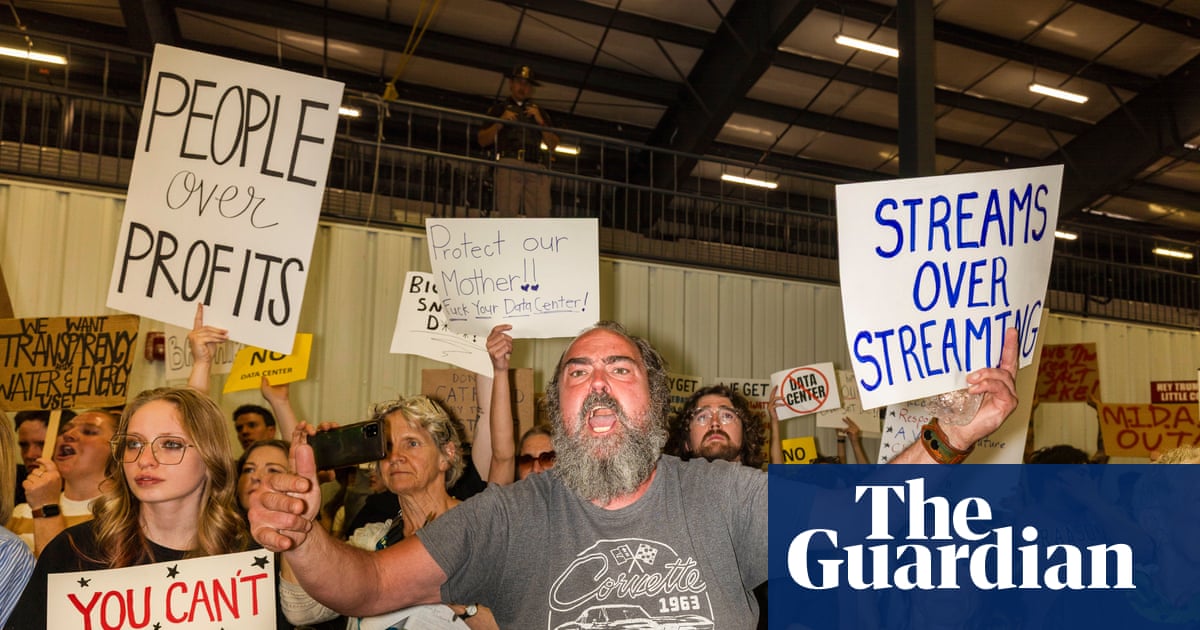
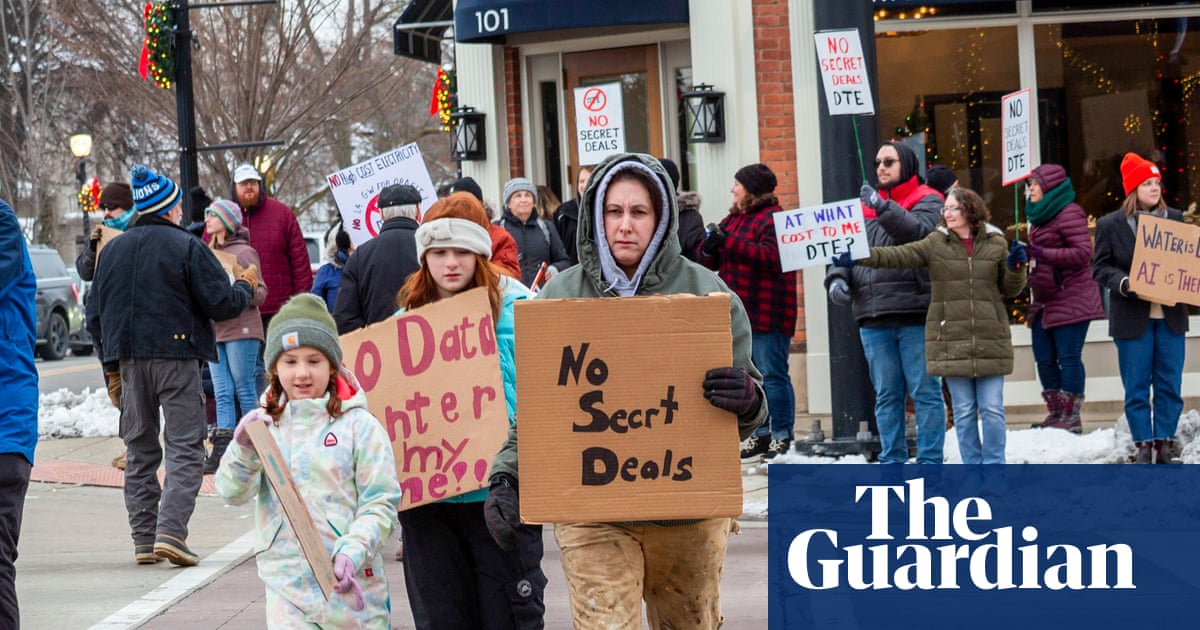
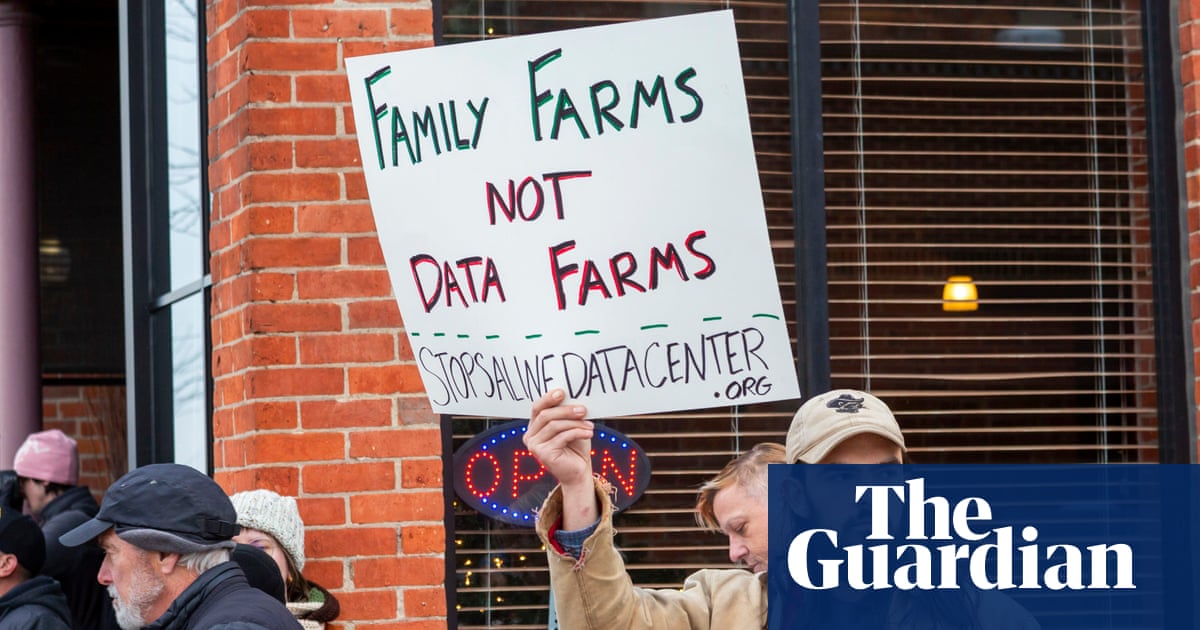
Fortunately for all of us, an unlikely and unruly coalition has emerged to resist the AI takeover by taking aim at the industry’s core infrastructure. In 2025, about 48 datacenter projects worth an estimated $156bn were blocked or stalled by local opposition. By all measures, 2026 is shaping up to be an even bigger year for the AI resistance.
From rural North Carolina to suburban Virginia to the foothills and farmlands of New Mexico and Oregon, ordinary people are coming together across partisan divides to say no to a status quo that allows tech lobbyists to ram through datacenter deals at a breathtaking clip, often behind a veil of secrecy enforced by NDAs. In deep red Indiana, more than 10 counties have enacted moratoriums or temporary bans on new AI datacenters; the Seminole Nation in Oklahoma recently passed a moratorium for their territory; and across New Jersey, project after project has been cancelled due to local fury about the raw deals on offer.
Nearly 4,000 people have lodged objections to the project being approved, with this pushback leading to contentious public meetings that Lee Perry, the Box Elder county commissioner, said have left him feeling “physically sick” amid alleged death threats and false accusations.
O’Leary has claimed in social media posts that most of the protesters don’t live locally and have been paid to object to the project. “There are professional protesters that are paid by somebody, I don’t know who,” O’Leary said in a video posted to X last week. “They’re being bused in.”
Opponents of the project have rejected this accusation. On Monday, a group calling itself the Box Elder Accountability Referendum filed an application for a referendum to reverse the commissioners’ approval of Stratos. If the group is able to collect 5,422 signatures from registered voters in the county in the next 45 days, the project approval will go to a vote in November.
“Instead of speaking with us, Kevin O’Leary went on social media saying we were out-of-state, paid protesters, and we don’t want people from out-of-state making decisions for us,” said Brenna Williams, lead sponsor of the referendum push.
“The only thing he’s right about is that we don’t want him, an out-of-state billionaire, making decisions for us.”
DeepMind’s UK workers voted to unionize in April. One of the workers said they were particularly driven by reports that Google was close to reaching a deal with the defense department and pointed to the US’s “capricious Iran war” and the Trump administration’s feud with Anthropic as indications that the department is “not a responsible partner”. The deal was ultimately announced on Friday.
Judge Lin’s ruling found that the government overstepped its authority in its attempts to punish and coerce Anthropic, stating that the Pentagon designating the AI company as a “supply chain risk” is “likely both contrary to law and arbitrary and capricious.
The bill’s official introduction comes as calls to halt AI datacenter expansion have gone from the margins to the mainstream. Since August 2025, towns and counties across the country – including in Missouri, Indiana, Georgia and North Carolina – have passed temporary bans on datacenter buildout. At least 11 states are now considering similar policies, according to Good Jobs First, a watchdog group tracking economic development.
Nurses, pro-Palestinian activists and social and climate justice groups applied pressure on the city government as part of a nationwide campaign known as Purge Palantir to stop the company from contracting with government agencies, universities and corporations.
Chief executive Dario Amodei said in a statement that the threats from the defense secretary, Pete Hegseth, would not change the company’s position, and that he hoped Hegseth would “reconsider”.
Check out Mobilize to find protests, postcard-writing parties, virtual events, and volunteer opportunities.
Action is the antidote to fear and despair.
Even doing small things - learning more about how we can strengthen our democracy, sharing what you know with others, making a phone call - can make a difference.